
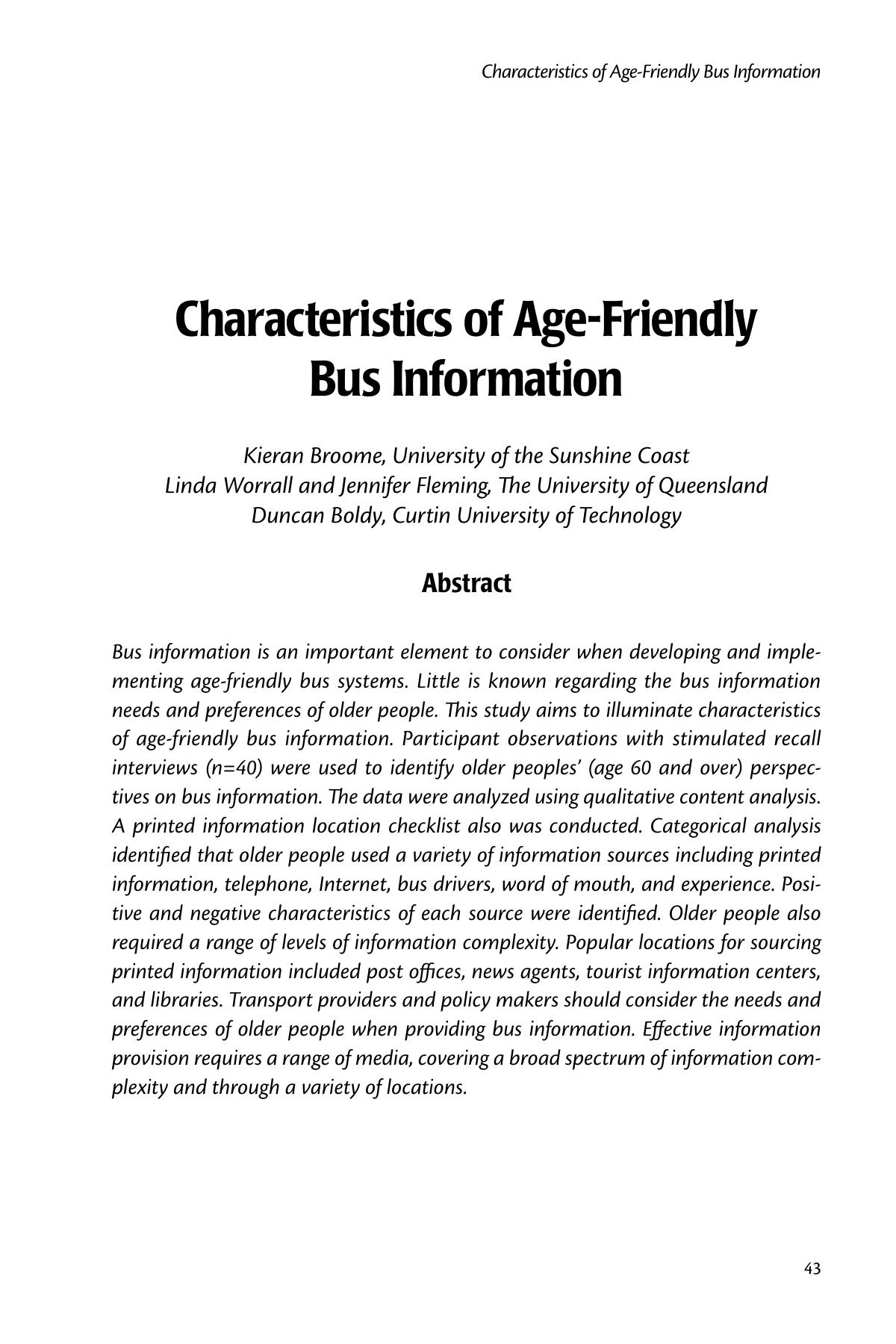
Broome, Worrall, Fleming and Boldy – CHARACTERISTICS OF AGE-FRIENDLY BUS INFORMATION 2011
£0.00
A downloadable PDF file for your personal use.
Description
This study explored older adults’ bus-information needs to inform age-friendly transport. Using stimulated-recall interviews with 40 Australians (age 60+) and a checklist of printed-timetable locations (n=33), researchers found older people rely on multiple information sources—printed timetables (favored), bus-stop materials, telephone helplines, bus drivers, word-of-mouth and personal experience—each with strengths and limitations. Key issues were limited availability and nonintuitive distribution of printed timetables, the central importance of route maps (with clear arrows, color coding and zone information), pocket-sized durable formats, and bus-stop consistency. Telephone and driver assistance were valued but variable in quality; Internet use was low but expected to grow. Older users require varying levels of information complexity, from simple departure times to detailed routing and fare details. Recommendations include multimodal information provision, improved printed-timetable design and broader distribution (post offices, newsagents, libraries, tourist centers, shopping centers), information at all stops, staff communication training, operator access on phone lines, and better online resources. Limitations include a small, single-country sample and need for quantitative follow-up.
Additional information
| Pages | 19 |
|---|---|
| Filesize | 0.1Mb |
Related products
-
Association of Public Transport Co-ordination Officers – PUBLIC TRANSPORT INFORMATION 1982
£0.00 Add to basket -
Association of Train Operating Companies – PROVISION OF CUSTOMER INFORMATION 2016
£0.00 Add to basket -
Anon – ONE-DIMENSIONAL TIMETABLES 1993
£0.00 Add to basket -
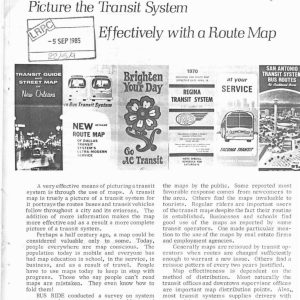
Anon – PICTURE THE TRANSIT SYSTEM EFFECTIVELY WITH A ROUTE MAP 1970
£0.00 Add to basket