
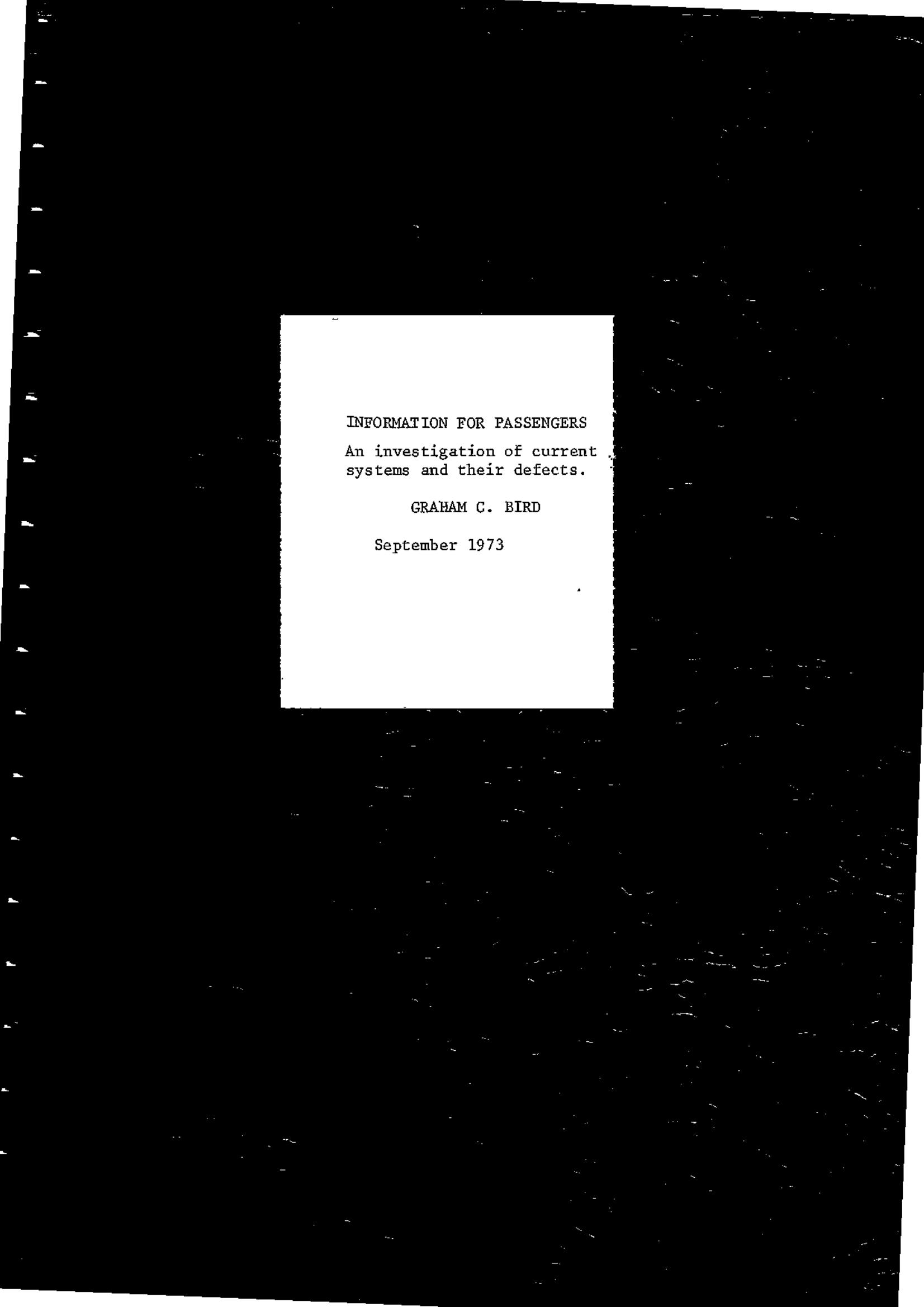
Bird – INFORMATION FOR PASSENGERS 1973
£0.00
A downloadable PDF file for your personal use.
Description
This 1973 study examined why passengers need public transport information, assessed existing provision, and recommended improvements to attract car users. Using interviews, enquiry-office surveys and a postal survey, it found information presentation generally poor: signage, timetables, maps and on‑vehicle/roadside displays were often inadequate, inconsistent, hard to find or outdated. Car drivers benefit from ready maps and signs; public-transport users must piece together multiple, sometimes unavailable data. Operator case studies showed variable practices—some travel centres and publications are effective, but interchange, multilingual provision, station/stop signing and inter-operator coordination are weak. Enquiry offices reported referrals, timetable stockouts, limited hours and delays; roadside information has been cut back and suffers vandalism; passengers often miss or distrust announcements. The report calls for multidisciplinary design input, centralised information offices in large towns, free arrival-point phones, integrated multimodal maps and timetables, standard symbols and colour-coding, expanded enquiry services, and research on information delivery and passenger behaviour to improve clarity, coordination and patronage.
Additional information
| Pages | 85 |
|---|---|
| Filesize | 1.8Mb |
Related products
-
Accent Marketing & Research – BUS STATION INFORMATION 1998
£0.00 Add to basket -
Anceresi, Gatti, Vecchi, Marelli and Rinaldi – A MAP OF WORDS 2023
£0.00 Add to basket -
Association of Transport Co-ordinating Officers – PRINTED INFORMATION AT BUS STOPS 2004
£0.00 Add to basket -
American Public Transit Association – TRANSIT MAPS 1984
£0.00 Add to basket