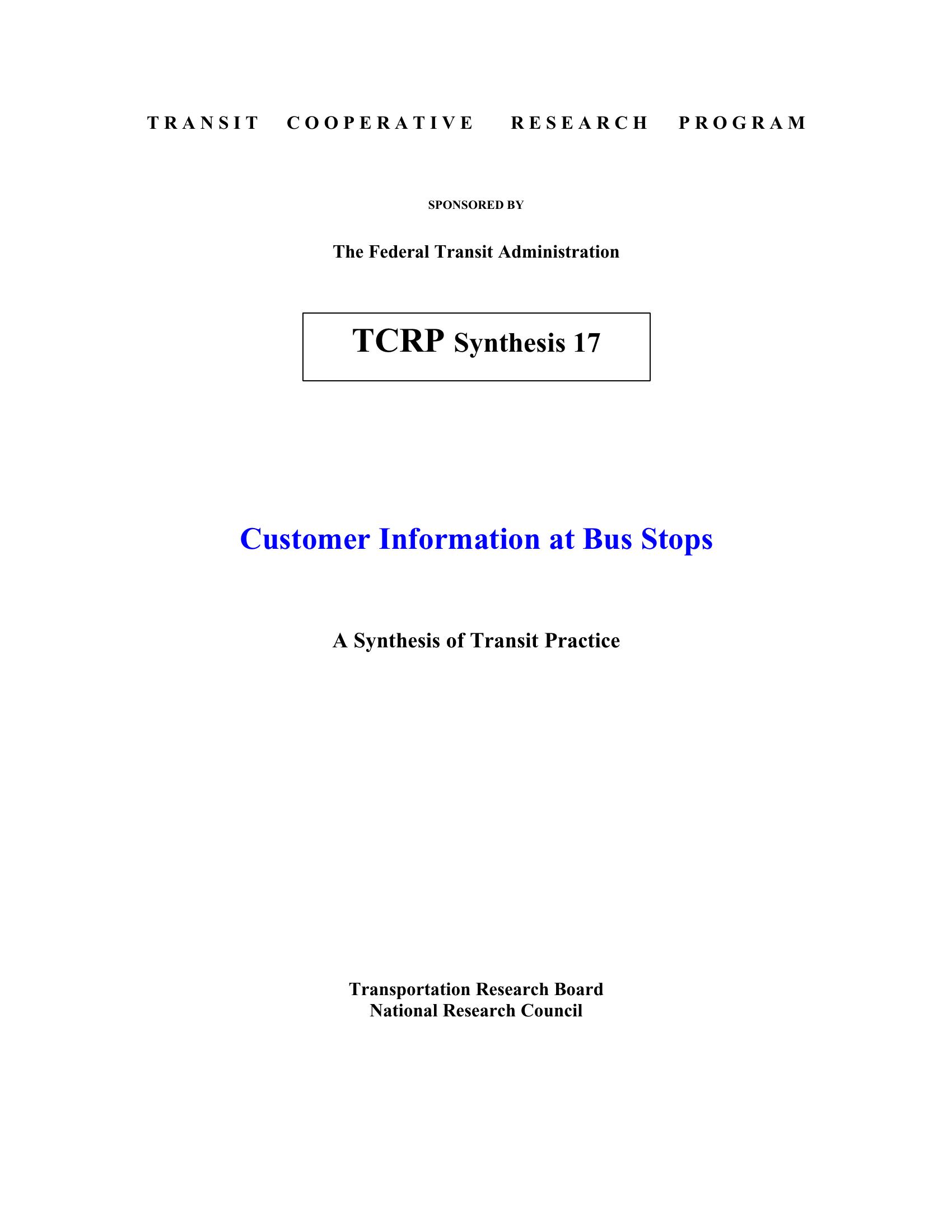
Dobies – CUSTOMER INFORMATION AT BUS STOPS 1996
£0.00
A downloadable PDF file for your personal use.
Description
This TCRP synthesis reviews bus-stop customer information practices from surveys, literature, and case studies. Transit agencies increasingly treat on-street information as essential for usability, using two primary forms: basic bus stop signs (route IDs, limited service info) and supplemental displays (schedules, maps, fares) in cases or shelters. Practices vary widely with little standardization; detailed displays are concentrated at high-activity stops (often 5% or fewer) because installation and especially ongoing maintenance labor drive costs. Agencies prefer durable, infrequently changing sign elements, post timepoint rather than stop-specific times, and rely on in-house graphic production and some automated schedule printing to reduce labor. Program responsibility spans marketing, planning, scheduling, public info, and maintenance and requires a current automated stop inventory. ADA, legibility, and stop importance guide deployment. Advanced electronic and AVL-linked displays showed promise but were limited. Costs and delivery methods vary; evidence of ridership payoff is inconclusive. Recommendations include research on bilingual displays, cost-effectiveness, real-time systems, and practical implementation guidance.
Additional information
| Pages | 73 |
|---|---|
| Filesize | 1.1Mb |